
Why the Toddler Years Matter More Than You Think
What Your Child Is Really Learning — and Why Montessori Environments Make a Difference
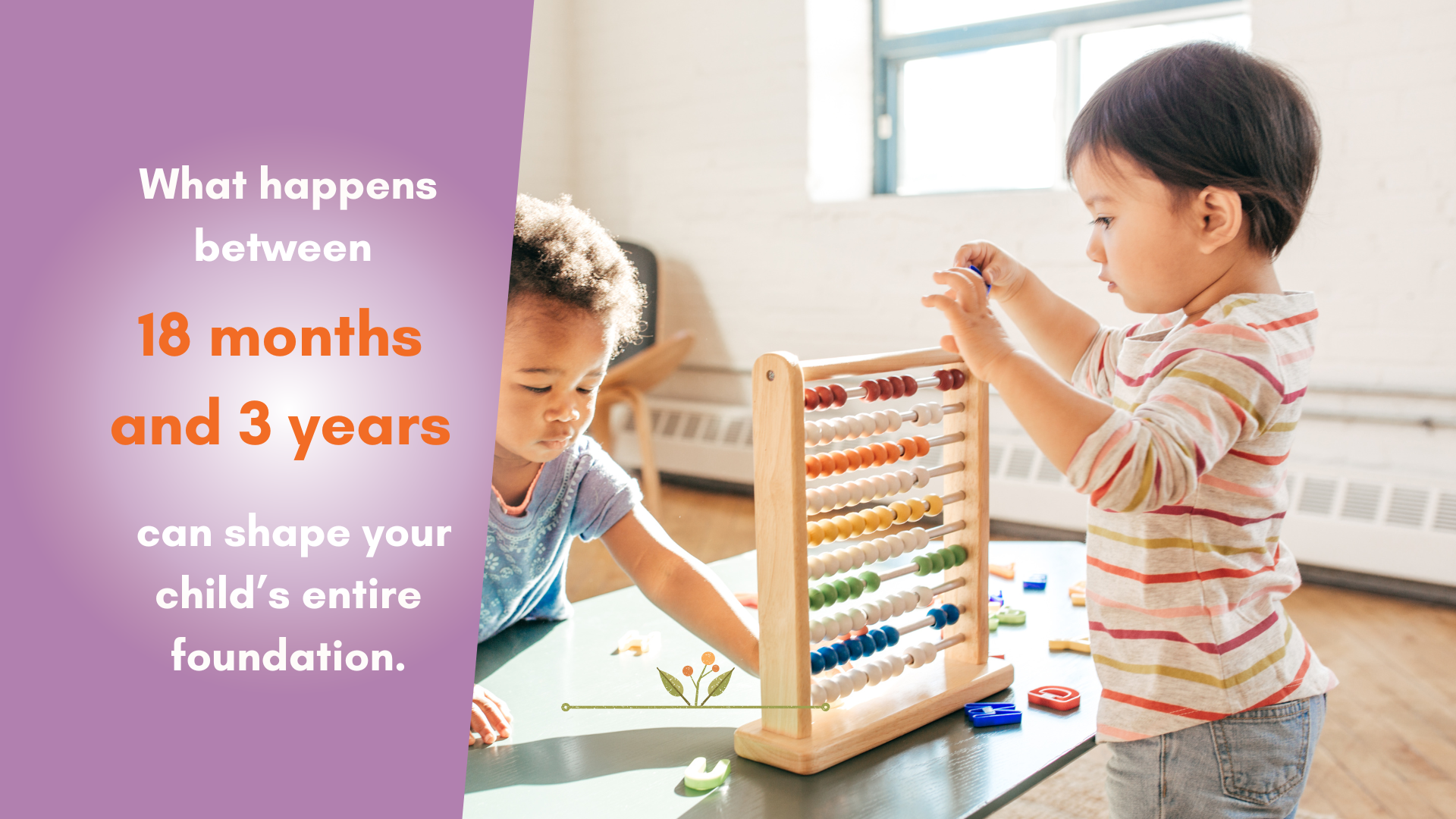
The years between 18 months and 3 years old are often misunderstood.
To many, this stage is seen as a holding period — a time for supervision, play, and basic care until “real learning” begins later. In reality, this is one of the most critical periods of brain development in a child’s life.
What happens during these toddler years lays the foundation for:
emotional regulation
language development
independence
social confidence
lifelong learning habits
Understanding what children are learning at this age — and how the environment supports or hinders that growth — can help families make more informed choices when considering daycare versus Montessori toddler programs.
What Is Happening Developmentally Between 18 Months and 3 Years?
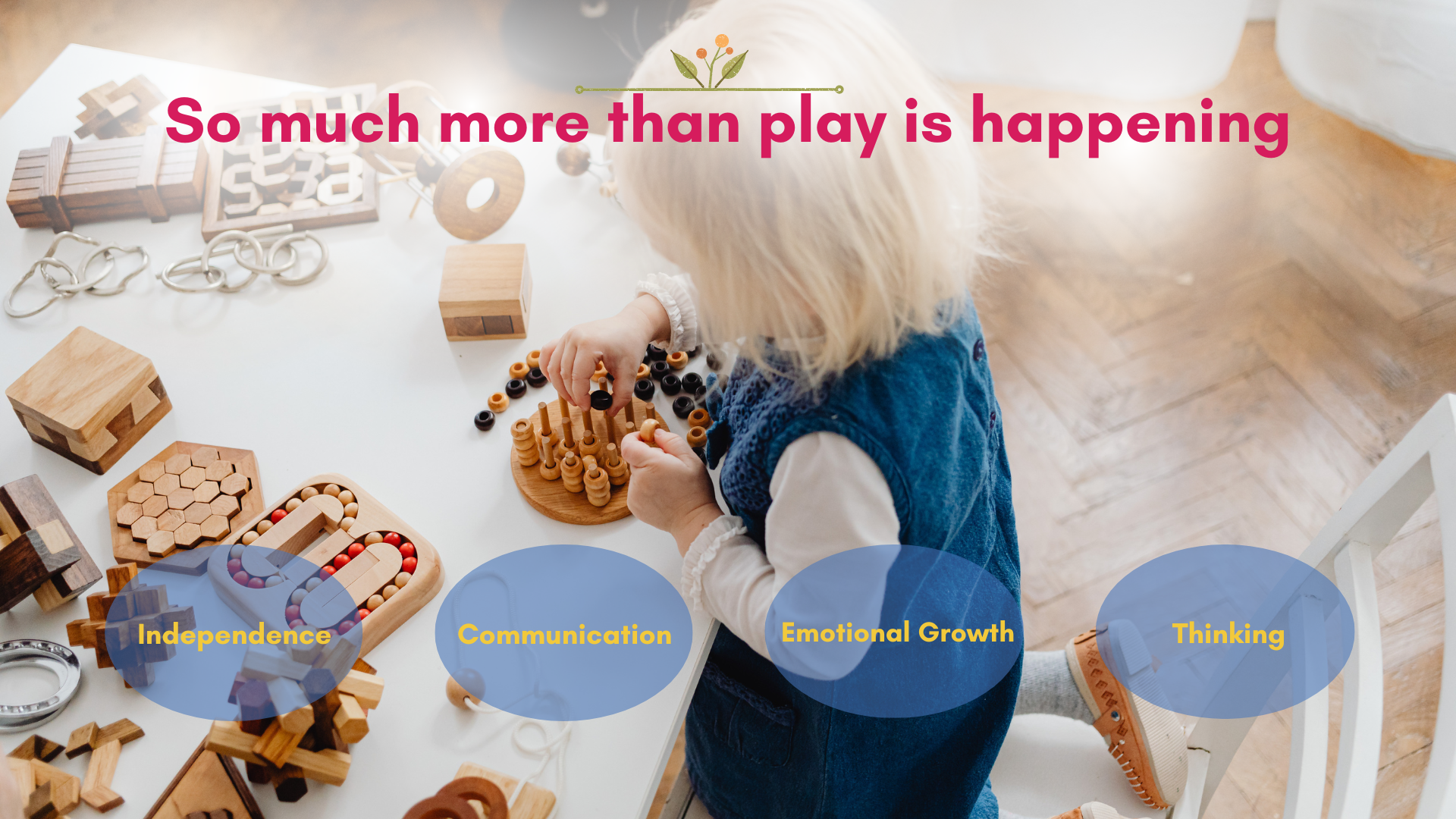
During the toddler years, children experience rapid growth across four key domains:
🧠 Brain & Cognitive Development
Neural connections are forming at an extraordinary rate
Children are learning through movement, repetition, and sensory exploration
Cause-and-effect understanding begins to emerge
Toddlers are not “just playing” — they are actively constructing intelligence through experience.
🗣️ Language Explosion
Vocabulary grows dramatically during this period
Children absorb language naturally through exposure, tone, and repetition
Multilingual environments strengthen cognitive flexibility and listening skills
This is often referred to as a sensitive period for language, meaning children learn languages more easily now than at any other time in life.
🤍 Emotional & Social Development
Separation awareness increases (hello, separation anxiety)
Toddlers begin identifying emotions — their own and others’
They start learning trust, attachment, and social boundaries
Supportive environments help children practice separation without fear, building emotional security rather than distress.
👐 Independence & Motor Skills
Children want to “do it myself” — and need opportunities to try
Fine and gross motor skills develop through purposeful movement
Daily routines become powerful learning moments
Independence doesn’t mean isolation — it means capability with support.
What Is Important for Toddlers to Learn at This Age?
At 18 months to 3 years, learning is not about worksheets or academic pressure. It’s about foundations.
Key priorities include:
self-care skills (washing hands, eating independently, dressing with support)
concentration and focus
emotional expression and regulation
respectful social interaction
confidence in exploring the world
The environment matters deeply in how — and whether — these skills develop.
Daycare vs. Montessori: What’s the Difference for Toddlers?
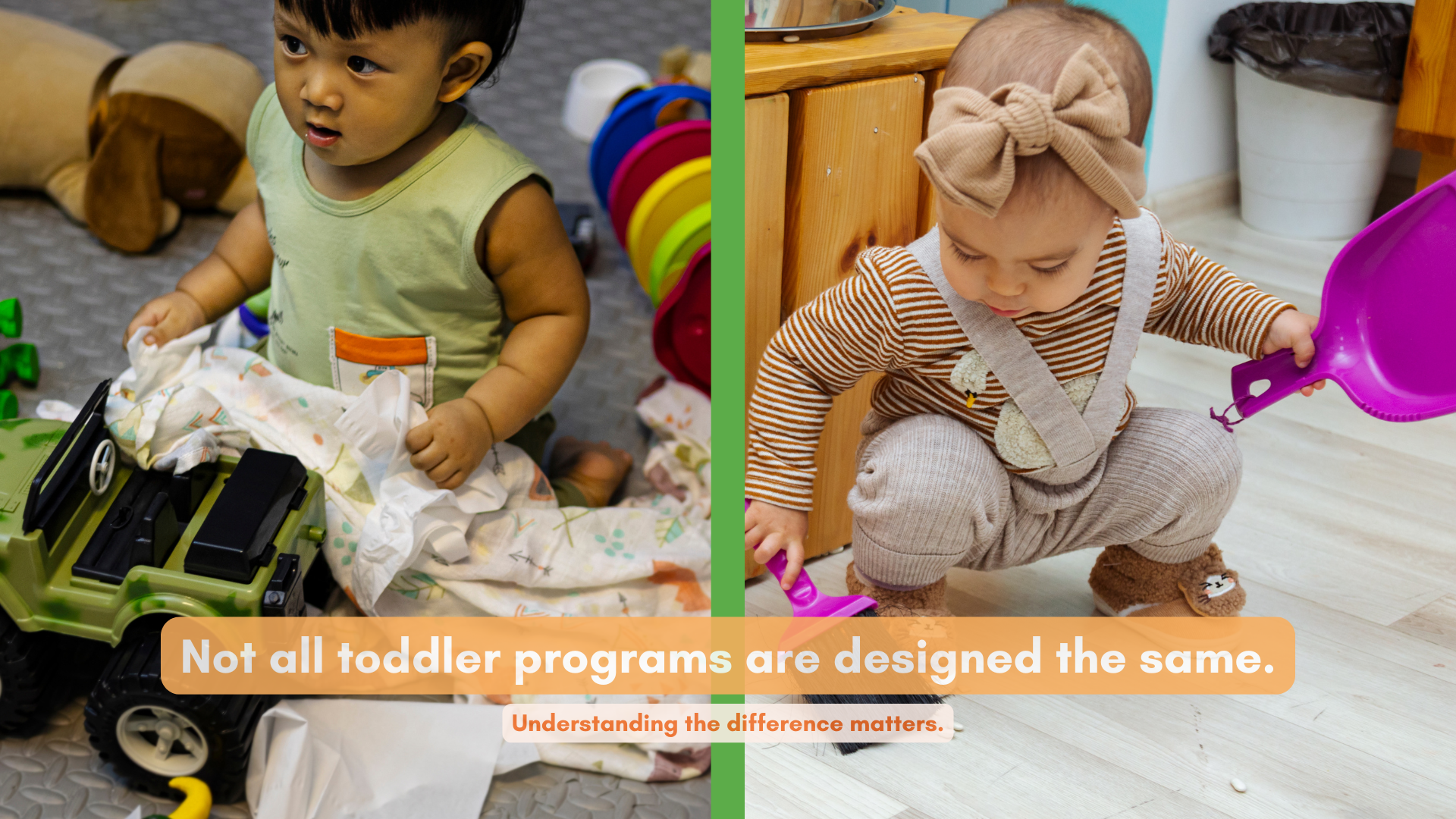
Many families compare traditional daycare with Montessori toddler environments, often assuming they are similar. While both provide care, their intent and structure differ significantly.
Traditional Daycare Environments Often:
follow adult-directed schedules
group children strictly by age
emphasize supervision over independence
use toys primarily for entertainment
rely on frequent transitions
This can meet basic care needs, but may limit opportunities for deep engagement and autonomy.
Montessori Toddler Environments Are Designed To:
support independence in age-appropriate ways
respect the child’s natural developmental pace
provide hands-on, purposeful materials
encourage movement, choice, and focus
foster emotional security through consistency
In Montessori settings, toddlers are viewed as capable learners, not passive recipients of care.
Why Montessori Is Especially Powerful for Ages 18 Months–3 Years
Montessori toddler programs are intentionally designed around how young children actually learn.
Key features include:
mixed-age communities that promote social learning
uninterrupted work periods that allow concentration to develop
real-world materials sized for small hands
calm, predictable routines that support emotional regulation
language-rich environments that nurture communication
Rather than asking children to adapt to adult expectations, the environment adapts to the child.
Addressing Common Parent Concerns
“Will my child be okay separating from me?”
Yes. When separation is handled with consistency, respect, and emotional support. Montessori environments intentionally support healthy attachment with caregivers while honoring the parent-child bond.
“Is my toddler too young for structure?”
Toddlers thrive on predictable rhythm, not rigid structure. Montessori provides freedom within clear, supportive boundaries.
“What about socialization?”
Montessori environments emphasize meaningful social interaction — modeling respect, cooperation, and empathy rather than forced group activities.
Choosing the Right Environment Matters
The toddler years are not something to “get through.”
They are something to honor and support.
Whether families choose Montessori or another path, understanding what children are learning — and what they need during this time — empowers parents to make choices rooted in development, not convenience.
When toddlers are given the right environment, they don’t just grow —
they flourish.
See the difference a prepared environment makes.
Experience a toddler community designed to support independence, language, and emotional development during the most formative years.
