
A closer look inside a day at Kukumi Montessori.
It’s one of the first questions parents ask…
What does my child actually do all day?
Not the philosophy.
Not the theory.
Just…
What does it look like in real life?

A thoughtfully prepared environment invites independence, allowing children to choose their work and move with purpose throughout the day.
The Day Begins: A Calm Start
Children arrive and enter a peaceful, prepared environment.
There’s no loud transition.
No rush to sit down.
Instead, they:
greet their guides
place their belongings independently
begin settling into the classroom
From the very beginning, the tone is different.
Calm.
Intentional.
Respectful.
The Work Cycle: Where Learning Happens
This is the heart of the Montessori day.
For an extended, uninterrupted period, children:
choose their own activities
work independently or in small groups
move freely within the classroom
You might see a child:
carefully pouring water between pitchers
tracing letters with their fingers
building numbers with hands-on materials
repeating the same activity multiple times
Not because they have to…
But because they want to.

Hands-on materials help children build real understanding through movement, repetition, and exploration.
The Role of the Guide
Instead of leading the entire group, guides move quietly through the room.
They:
observe each child closely
introduce new lessons one-on-one or in small groups
step in when support is needed
This allows each child to:
move at their own pace
build confidence through independence
stay deeply engaged in their work
Spanish Immersion - Naturally Woven In
Throughout the day, Spanish is part of the environment.
Children hear it during:
lessons
conversations
everyday interactions
They begin to:
understand meaning through context
respond naturally
absorb language without pressure
It doesn’t feel like a “lesson.”
It feels like part of their world.
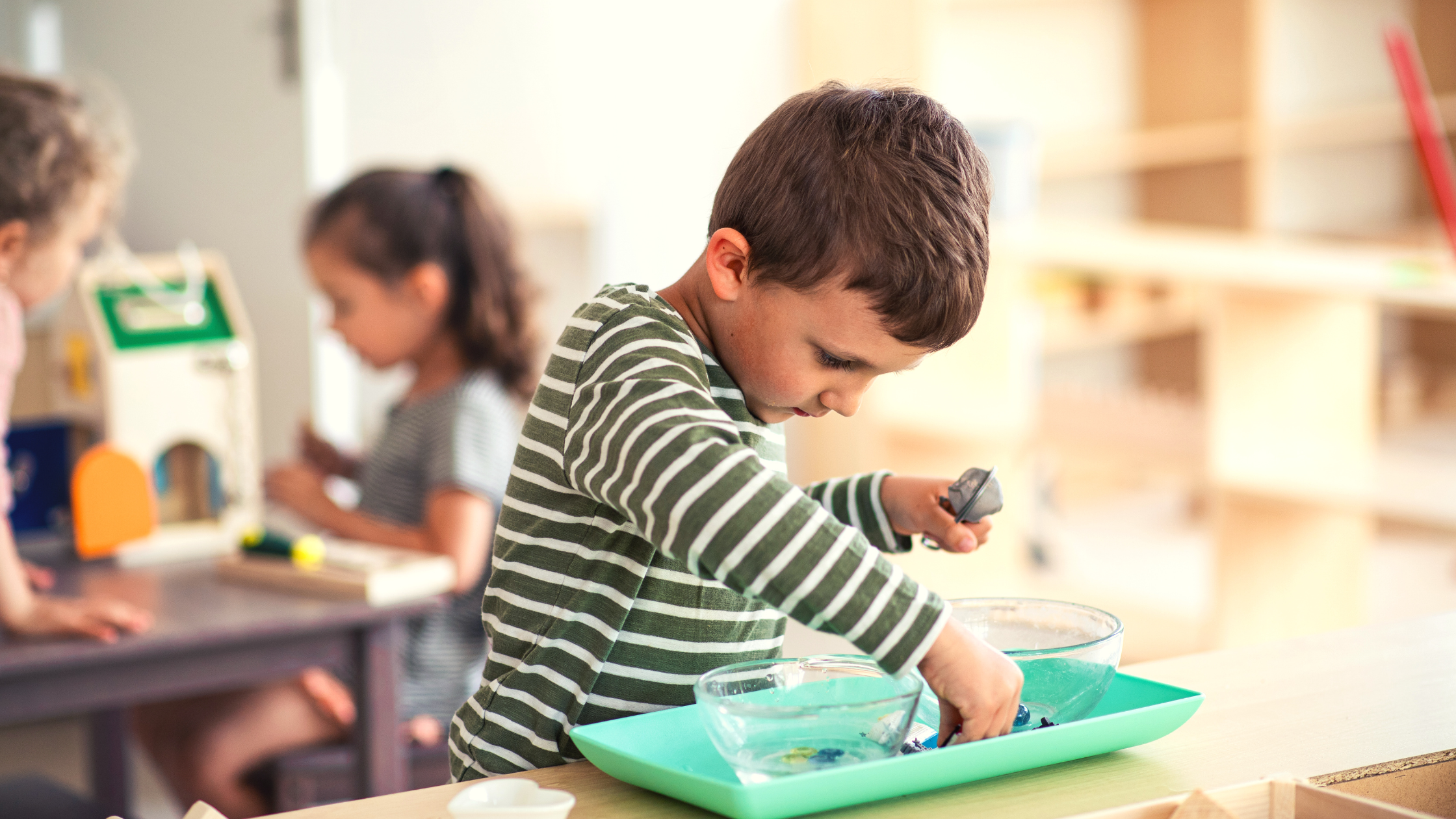
Through everyday activities like pouring and transferring, children develop coordination, focus, and confidence.
Midday: Food, Rest, and Reset
As the morning transitions, children:
prepare for lunch
practice independence through routines
share time with their peers
Depending on age, the day may include:
rest time
quiet activities
outdoor play
These moments are just as important as academic work.
They support:
regulation
social development
overall well-being
Afternoon: Continued Exploration
In the afternoon, children return to:
meaningful work
creative activities
movement and outdoor time
The pace remains balanced.
There’s structure but also space.
What You Notice Most
When you observe a Montessori classroom, a few things stand out:
Children are focused
The room is calm
There’s a sense of purpose
And perhaps most surprising…
Very little need for constant correction
Because the environment itself supports the child.
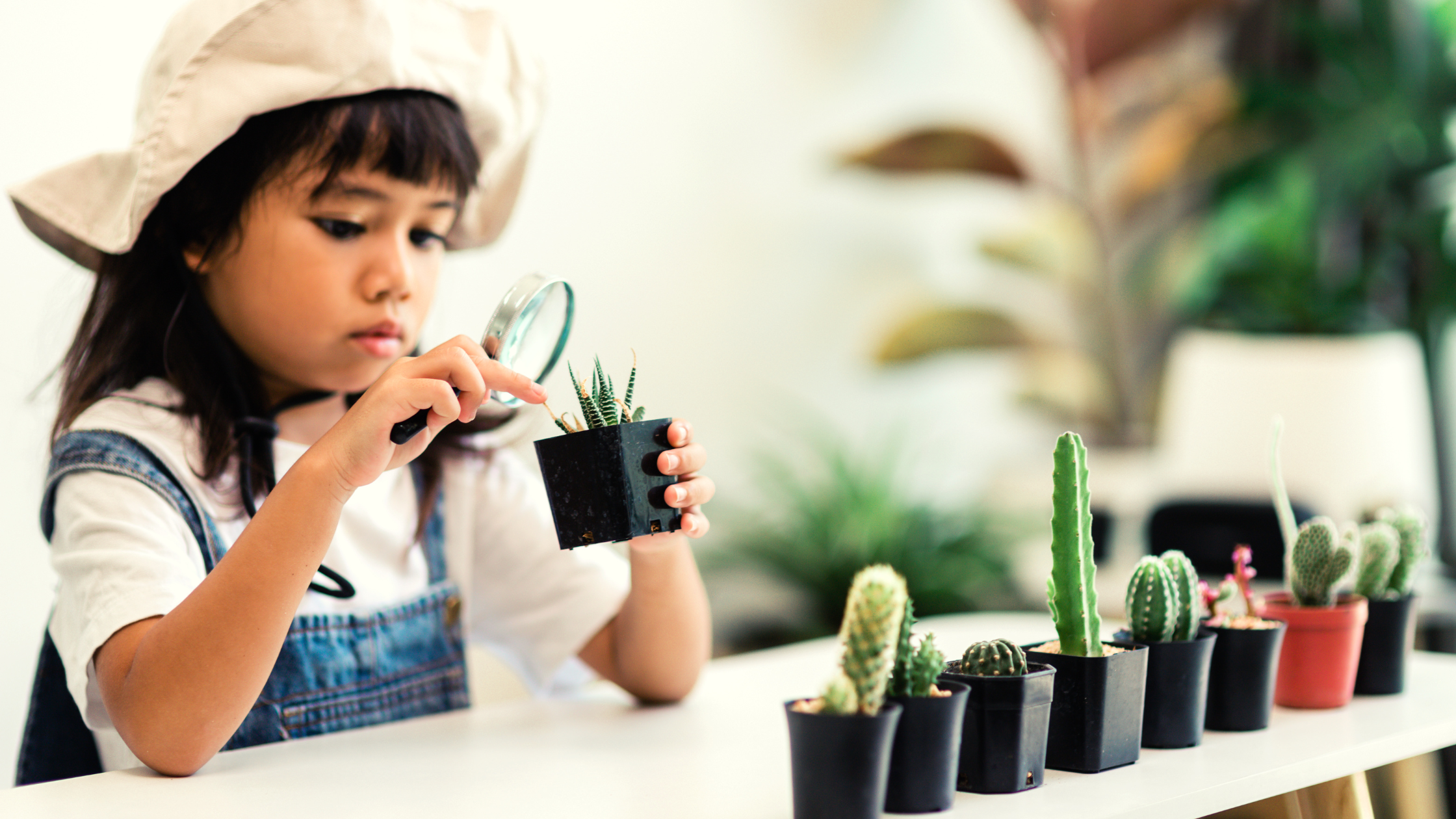
Focused, curious, and fully engaged. Children in a Montessori environment are encouraged to explore, observe, and discover at their own pace.
What Your Child Gains From This
Over time, this daily rhythm helps children build:
Independence
Concentration
Confidence
Problem-solving skills
Not through pressure—
But through experience.
What This Looks Like at Kukumi
At Kukumi Montessori, every part of the day is intentionally designed to support the whole child.
From:
the prepared environment
to the Spanish immersion
to the guidance of experienced educators
Your child is not just being taught—
They are actively becoming.
A Final Thought
A Montessori day may look different than what you’re used to.
But once you see it…
It makes sense.
If you’d like to experience it for yourself…
We invite you to step inside the classroom.
